
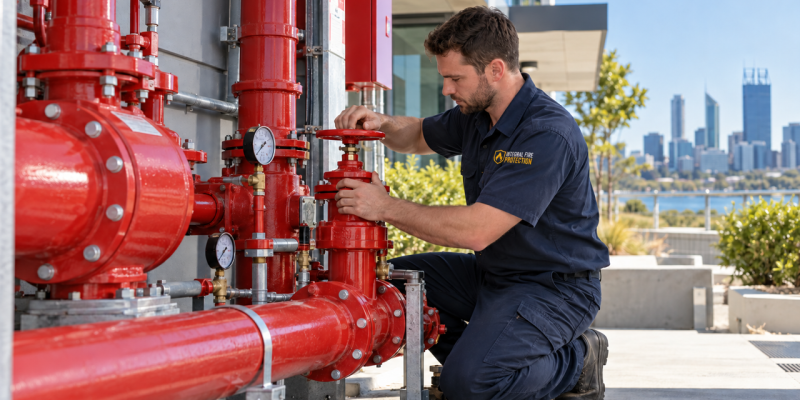
Fire equipment compliance in Perth covers more ground than just extinguishers.
Under AS 1851-2012 your obligations extend across hose reels, hydrant systems, fire alarm panels, emergency lighting, sprinkler systems and fire doors, each on its own servicing schedule and each requiring its own documentation at every visit.
Getting one category right while another runs overdue is still non-compliance.
This article covers what the standard is, who carries the responsibility and what a gap in your records can cost you.
What Fire Equipment Is Actually Covered?
Portable fire extinguishers are a good starting point. A fully compliant premises needs to address fire hose reels, hydrants and booster assemblies, fire alarm and detection systems, fire indicator panels, emergency and exit lighting, fire doors and smoke doors, sprinkler systems and fire pumps where installed.
Each of those asset types carries its own inspection and service requirements under AS 1851-2012.
A business that keeps its extinguisher tags current but hasn’t had its emergency lighting tested in two years, or whose fire panel hasn’t been touched since the original installation, is not compliant.
A tagged extinguisher on the wall says one asset has been checked. It says nothing about the hose reel in the corridor, the panel in the foyer or the exit lights above the stairwell. If those haven’t been attended to then the building is not compliant regardless of how current the extinguisher tags are.
Who Is Responsible for Fire Equipment Compliance in WA?
Under the Work Health and Safety Act 2020, the person conducting a business or undertaking the PCBU carries the primary duty of care. In plain terms that means the business owner or whoever controls the premises.
For leased premises, most commercial leases split responsibility between landlord and tenant. Base building systems like hydrants, sprinklers and fire panels generally sitting with the building owner and portable equipment within the tenancy sitting with the tenant.
That is not the same everywhere and assuming the other party holds responsibility is a common cause of a gap in compliance, so it is important to read your lease agreement.
Where a strata company manages common property, everything in shared spaces falls under the strata company’s compliance obligations. Extinguishers, hose reels, hydrants, exit lighting and shared detection systems all need to be on a current servicing schedule with records that are easily available if anyone needs them.
Fire Equipment Servicing Intervals Under AS 1851-2012: What Perth Businesses Need to Know
Six months, twelve months, five years. Those are the intervals that govern most fire equipment categories under AS 1851-2012 and each one covers a different level of work.
At six months a qualified technician will assess the physical condition of extinguishers, hose reels, hydrant systems and detection equipment, testing pressure, signage, accessibility. They will also see whether anything has been damaged or moved since the last visit.
The annual service goes deeper into each asset with functional testing that the six monthly check doesn’t get into.
At five years the cylinders get pressure tested, system components get a thorough assessment and in a lot of cases a unit gets replaced rather than refurbished because the cost difference rarely makes refurbishment worth it.
These intervals are the minimum, not a flexible target. If your last service was nine months ago and the standard says six, you have been out of compliance for three months regardless of what the equipment looks like from the outside.
What Happens During a Fire Equipment Compliance Audit in Perth
An audit can occur for many reasons.
The Department of Fire and Emergency Services can inspect any commercial premises. Building certifiers assess compliance as part of occupancy and development processes. Insurers ask for servicing records at renewal and for claims.
And when a commercial lease is up for renewal or a property changes hands, compliance documentation tends to come up.
When an auditor comes to your premises they want to see maintenance record tags on your equipment, service logbooks and the written reports your technician issued at each visit.
Gaps in that record like missing visits, incomplete documentation, tags that haven’t been updated get noted as deficiencies.
In serious cases or where the same gaps keep appearing, you may get a formal notice or fined. If there are any insurance claims, this can also cause complications.
Why Fire Equipment Service Records Matter for Perth Businesses
AS 1851-2012 requires that when your systems are serviced, there is clear documentation. What was inspected, the condition of the equipment, any faults found and what was done must all be included in the documentation.
Updated maintenance tags and a written service report at each visit are part of what compliance looks like, not extras you can skip.
An area that catches a lot of businesses is insurance. If there is a fire and the equipment was overdue for a service or records can’t be found, the insurer may dispute the claim.
That is an expensive situation to deal with alongside the fire itself. The records your technician keeps on your behalf are part of what protects you.
Fire Equipment Compliance Services Across Perth and WA
At Integral Fire Protection we work with commercial businesses, industrial facilities, strata companies and property managers across Perth and throughout Western Australia to keep fire equipment compliant with AS 1851-2012.
We cover a full range of fire protection services from portable extinguishers, hose reels, hydrants, fire alarm systems, panels, exit lighting to fire doors.
Every one of our services comes with full documentation. This means updated tags and written reports at each visit so your records are always in order and ready if they’re ever needed.
Our technicians are FPAA accredited and our approach to record keeping is the kind that holds up in audits, lease negotiations and insurance reviews.
If you are not sure your compliance position is solid, a free site audit is the clearest way to find out.
Get in touch with the team at Integral Fire Protection and we will take a look.